
Furnace Blowing Cold Air When Heat Is On? Find the Real Cause
If your furnace is running and air is coming from the vents but it feels cold, the blower itself may not be the problem. Start with the thermostat fan setting, then look at airflow, burner behavior, flame sensing, and condensate safety issues. The point where heat disappears tells you much more than replacing parts at random.
If your furnace is blowing cold air, first make sure the thermostat is set to Heat and the fan is set to Auto rather than On. A brief cool-air burst at startup can be normal. If the air stays cold, check the filter and vents, then watch the heating cycle. Burners that light and shut off quickly point toward a different problem than burners that never light at all.

Is a Short Burst of Cold Air Normal?
Yes. A furnace does not necessarily send warm air the instant the thermostat calls for heat. The burners may ignite first and the blower may wait briefly while the heat exchanger warms. At the end of a cycle, the blower can also run for a short time to remove remaining heat.
Carrier notes that a short startup delay before warm air reaches the vents can be normal. The problem is when the air stays cold for several minutes or the system repeatedly switches between brief heat and long periods of cold airflow.
Manufacturer reference: Carrier — Why Is My Furnace Blowing Cold Air? .
What the Symptom Tells You
| What you notice | What it may mean | Check next |
|---|---|---|
| Cold air all the time, even between heating cycles | The thermostat fan may be set to On. | Thermostat fan setting. |
| Warm air starts, then becomes cold | Burners may be shutting down while the blower keeps running. | Filter, high-limit condition, flame sensing. |
| Burners light, then shut off within seconds | The flame may not be staying proven. | Flame sensor or ignition-related service. |
| Weak airflow and the furnace cycles oddly | Restricted airflow can contribute to overheating. | Filter, return vents, supply registers. |
| High-efficiency furnace will not heat and drain area is wet | A condensate problem may be interrupting operation. | Condensate drain and safety switch. |
1. Check the Thermostat Fan Setting First
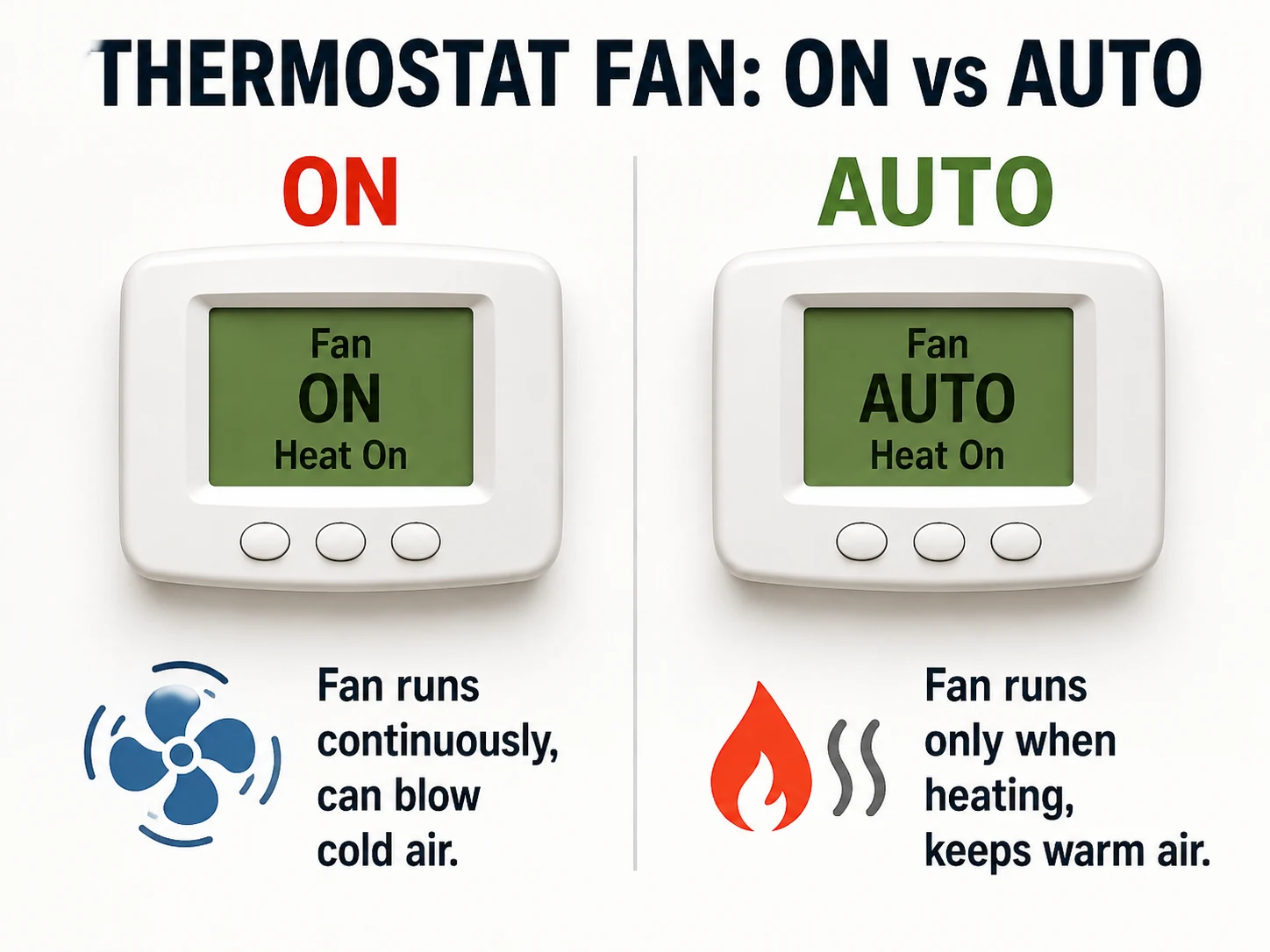
Set the thermostat to Heat, then check the fan setting. For normal heating operation, Auto is usually the better diagnostic setting because the blower runs with the heating cycle instead of circulating continuously.
If the fan is set to On, the blower may continue moving room-temperature air through the ducts after the burners shut off. That can feel like a heating failure even when the furnace is cycling normally.
The furnace may have been heating normally while the blower was simply running continuously between cycles.
Continue to airflow and watch what the burners do during a heating call.
2. Check the Filter and Airflow
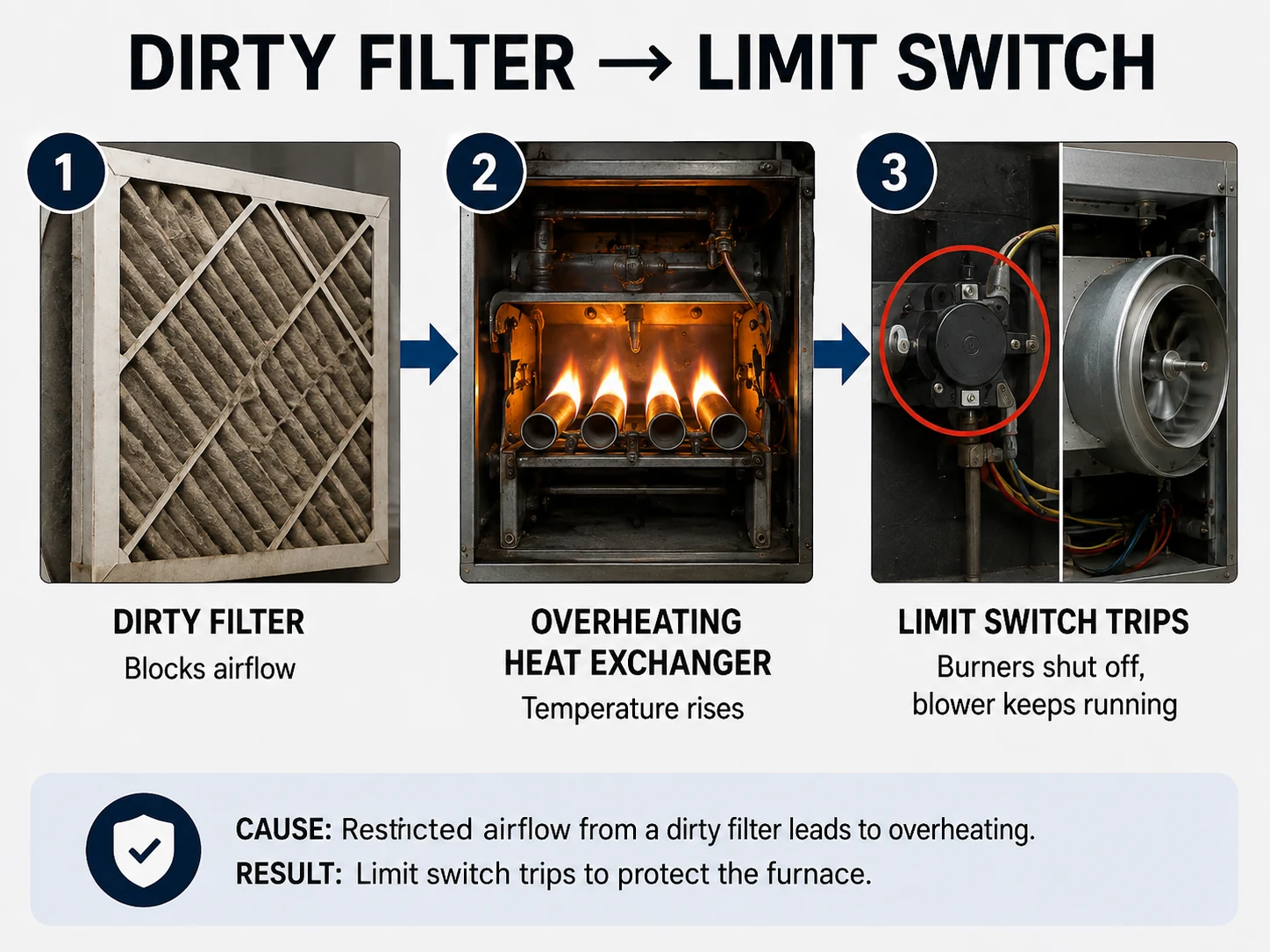
A dirty filter does more than reduce comfort. It can restrict airflow across the heat exchanger. If heat builds up too far, the furnace high-limit safety can shut down the burners while the blower continues running to cool the equipment. That creates a classic “furnace blowing cold air” symptom.
Trane and Carrier both identify restricted airflow and dirty filters as common causes of overheating and limit-switch shutdowns.
Turn the furnace off before handling the filter
Use the normal service switch or thermostat to stop operation, then check the filter. If it is visibly loaded with dust or overdue for replacement, install the correct size and type specified for the system.
Open blocked supply and return vents
Make sure furniture, curtains, rugs, boxes, or closed registers are not severely restricting the designed airflow path.
Reference: Trane — Furnace Limit Switch and Restricted Airflow .
3. Watch What Happens to the Burners
If you can safely observe the burner area through the normal viewing opening described by your owner’s manual, the timing can provide an important clue. Do not remove safety guards or defeat the blower-door switch to watch the furnace operate.

The heating cycle is producing heat. If some rooms still feel cold, the issue may be airflow balance or duct-related rather than burner operation.
Flame sensing, overheating, ignition lockout, or another safety condition may be stopping the heating cycle.
4. Understand the Flame Sensor Clue
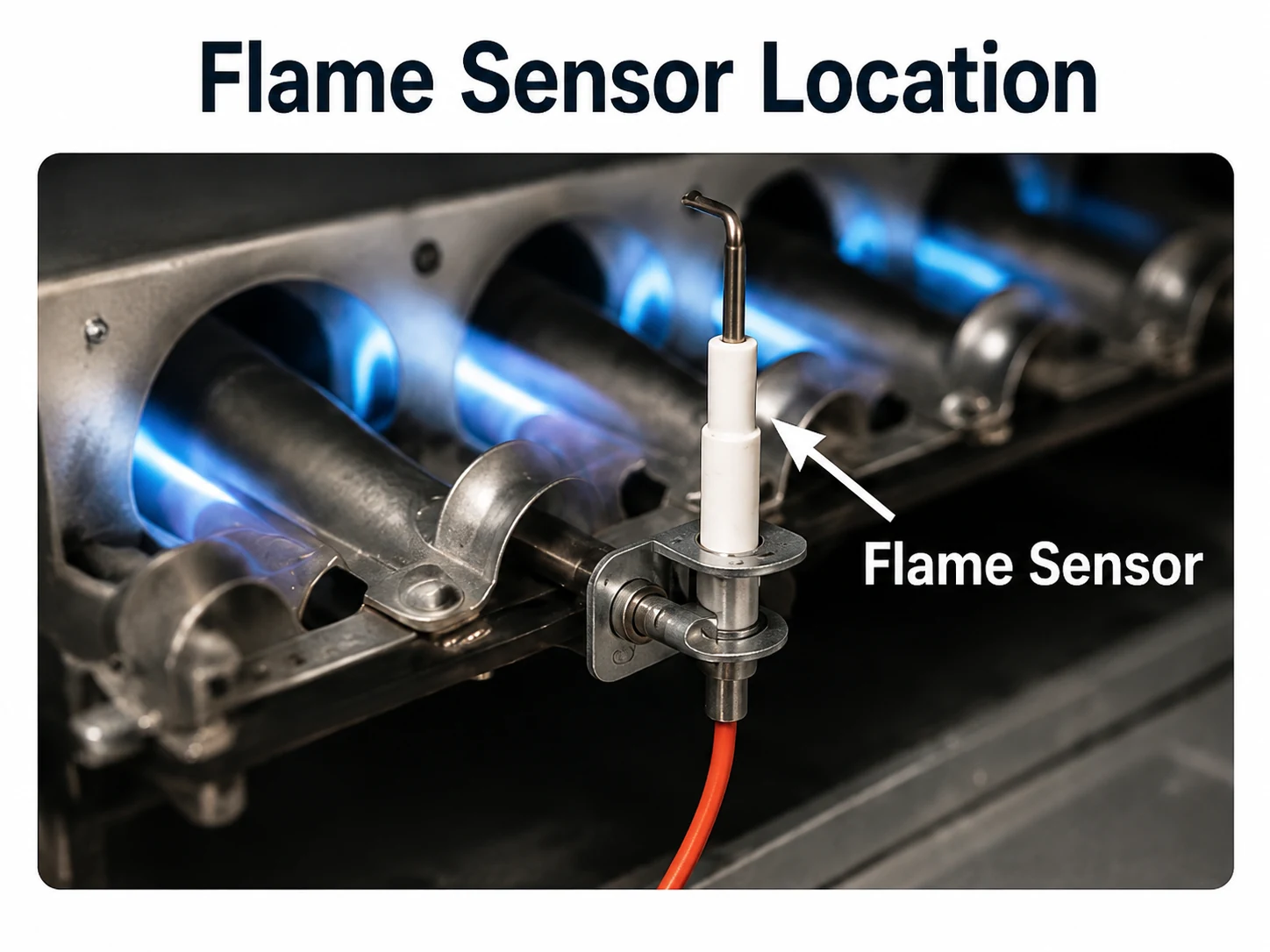
On many modern gas furnaces, the flame sensor confirms that the burners are actually lit. If the control does not receive the expected flame signal, it can close the gas valve for safety. The blower may continue operating, so the vents can start blowing cool air.
A common symptom is: the furnace starts, the burners light, then the burners shut off within a few seconds. Carrier and Trane both identify flame-sensor problems as one possible cause of that pattern.
If the symptom points toward flame sensing, ignition, gas-valve operation, or repeated lockout, use the furnace error code and model-specific service information and have a qualified HVAC technician diagnose the gas and ignition system.
5. Check Whether the Furnace Is Overheating
If the furnace produces heat for a while and then the burners stop while the blower keeps running, restricted airflow can be causing the heat exchanger area to get too hot.
The high-limit switch is designed to protect the furnace from overheating. When the limit opens, burner operation can stop while the blower continues to cool the unit. That is why a dirty filter or blocked return can eventually look like a “cold air” problem rather than simply a weak-airflow problem.
Correct filter, open supply registers, clear return grilles, normal thermostat settings, and no obvious blockage around the furnace.
Repeated limit trips, failed limit switch, blower performance, gas input, heat-exchanger concerns, or control-board faults.
6. High-Efficiency Furnace? Check the Condensate Path

High-efficiency condensing furnaces produce condensate. If the drain, trap, pump, or associated safety device detects a drainage problem, the furnace may interrupt heating operation rather than continue under unsafe conditions.
Trane lists clogged condensate drain lines among causes that can stop burner operation while the blower sends cool air through the home.
Look for obvious water backup
Without opening sealed combustion components, inspect the accessible drain tubing, condensate pump, and floor around the furnace for standing water, loose tubing, or a visibly full pump reservoir.
Do not bypass a condensate safety switch
A safety switch that stops the furnace is doing its job. If the drain path is not clearly accessible or the problem returns, have the condensate system serviced.
Reference: Trane — Furnace Not Blowing Hot Air .
What If the Furnace Never Produces Heat at All?
If the blower runs but the burners never ignite, that begins to overlap with a different troubleshooting path: thermostat call, furnace power, ignition sequence, pressure switch, igniter, gas supply, and lockout conditions.
Instead of repeating every no-start check here, browse the HVAC Troubleshooting section for the guide that matches a furnace that does not begin a normal heating cycle.
What If Only One Room Gets Cold Air?
If most rooms receive warm air but one room stays cold, the furnace itself may be heating correctly. Look at the supply register, return-air path, duct leakage, damper position, and airflow balance for that room.
A whole-house cold-air symptom is more consistent with a furnace heating-cycle problem than one isolated room.
When to Stop Troubleshooting
Do not bypass pressure switches, limit switches, flame sensors, blower-door switches, gas valves, or other safety controls. Gas-pressure adjustment, combustion testing, venting repairs, and internal live-voltage diagnosis require proper training and instruments.
The Bottom Line
When a furnace is blowing cold air, start with the easiest distinction: Is the blower simply running between heating cycles, or are the burners shutting down while the blower keeps going?
Set the thermostat fan to Auto, check the filter and vents, then watch the heating pattern. If heat starts and then disappears, airflow restriction, high-limit operation, flame sensing, or another safety shutdown becomes more important than replacing the blower.
For more help, browse HVAC Troubleshooting or visit the HomeIssueLab Troubleshooting Guides.
Frequently Asked Questions
Why is my furnace blowing cold air when the heat is on?
Common causes include the thermostat fan being set to On, a normal short startup delay, restricted airflow that triggers a limit condition, burners shutting off, flame-sensor problems, or a condensate safety issue on a high-efficiency furnace.
Should the thermostat fan be on Auto or On for heat?
Auto is usually the better setting for normal heating because the blower runs with the heating cycle. On can circulate room-temperature air between heating cycles.
Can a dirty furnace filter cause cold air?
Yes. Severe airflow restriction can make the furnace overheat, causing the high-limit safety to shut down the burners while the blower continues to run.
Why do my furnace burners light and then turn off?
Flame sensing, overheating, ignition lockout, or another safety condition can stop the burners after ignition. The exact cause should be diagnosed from the furnace sequence and error code.
Can a clogged condensate drain stop a furnace from heating?
On some high-efficiency condensing furnaces, a drainage problem can trigger a safety condition that interrupts burner operation.
Official References
The troubleshooting order in this guide is cross-checked against current manufacturer guidance for thermostat settings, airflow, limit protection, flame sensing, and condensate-related shutdowns.