
Toilet Keeps Running After a Flush? Find the Cause Before You Buy Parts
A running toilet usually gives you a clue before you touch a wrench. Look at where the water is going, then use three simple checks to separate a fill-valve or water-level problem from a leaking flapper or flush-valve seal.
Take the tank lid off and wait until the toilet should be finished filling. If you can still hear water, watch the overflow tube and the water level. If the toilet gets quiet but turns itself back on a few minutes later, the tank is probably losing water somewhere else.
Which running-toilet pattern do you have?

Know the Five Parts You Actually Need to Check
You do not need to understand every part inside the tank. For this problem, focus on the fill valve, float, overflow tube, flapper or canister seal, and the handle/chain connection.
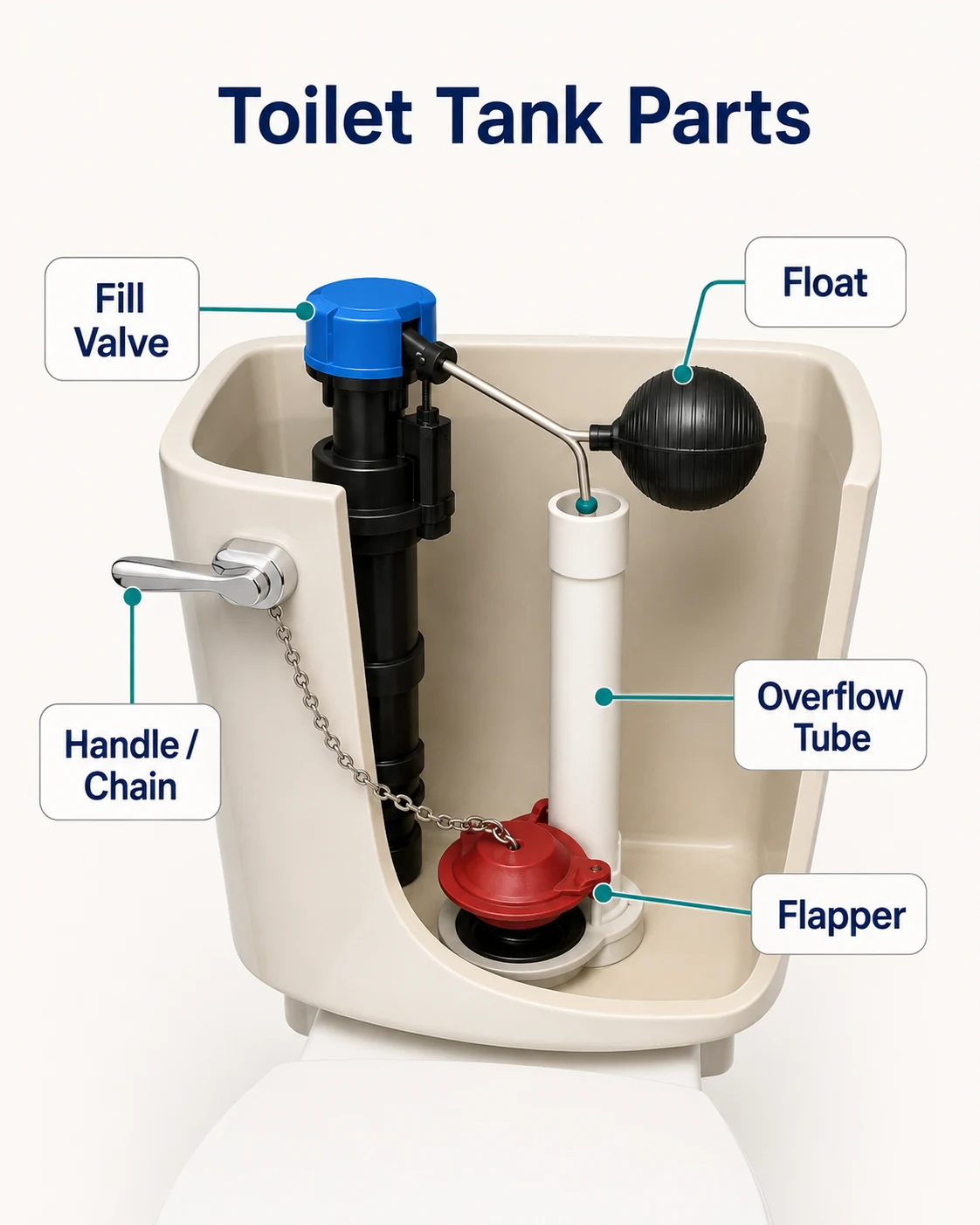
Some toilets use a rubber flapper like the one shown here. Others use a canister-style flush valve with a rubber seal underneath. The diagnosis is similar: if water can leak past that seal, the tank level drops and the fill valve turns on again.
Pattern A: Water Is Going Into the Overflow Tube
If you can see water flowing into the top of the overflow tube after the toilet should be full, the tank is being overfilled. That makes the fill valve, float, or water-level adjustment your first target. Do not start with the flapper.
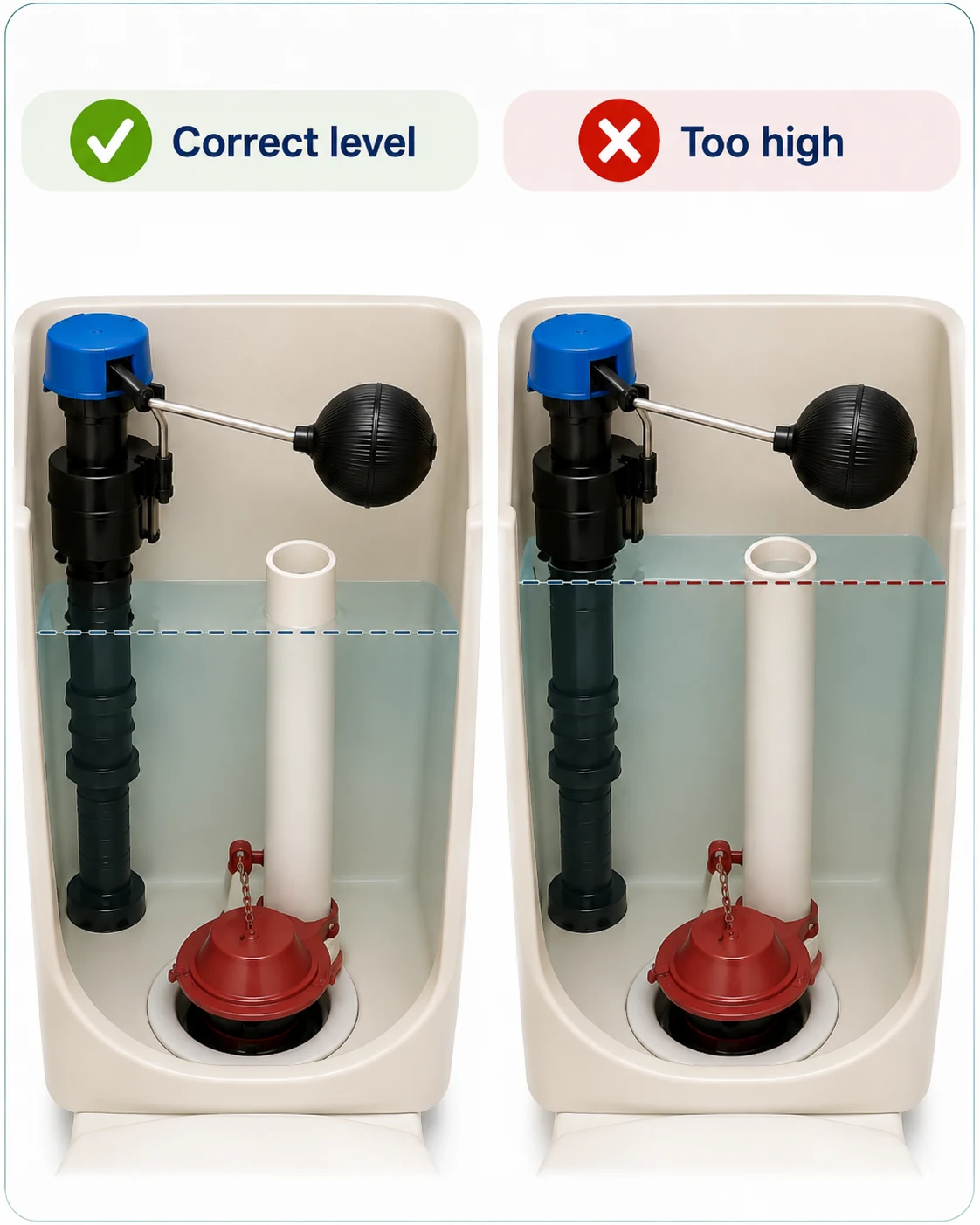
Check the tank’s water-line mark
Many tanks have a molded or printed water-line mark. If yours does, use it. If not, Kohler recommends setting the water level about one inch below the top of the overflow tube on typical installations.
Lift the float gently
If raising the float makes the incoming water stop, the valve can shut off and the level may simply need adjustment. If the fill valve keeps running even when the float is clearly in the shutoff position, the valve may be dirty, sticking, or worn.

You have identified the problem without replacing a part. Flush the toilet several times and make sure the tank now refills to the same level and stops cleanly every time.
Sediment or wear inside the fill valve may be preventing a clean shutoff. Some valves can be serviced according to the manufacturer’s instructions; otherwise, replacement of the correct fill valve may be the practical next step.
Pattern B: The Toilet Stops, Then Refills Again
This pattern is different. The fill valve shuts off normally, but the tank slowly loses water. Once the level drops far enough, the fill valve turns on again to replace what leaked out.
Kohler’s troubleshooting guidance points to the flapper or canister seal, chain adjustment, and flush-valve sealing surface as common causes of this occasional refill behavior.
Use the Dye Test Before Buying a Flapper
This is one of the most useful running-toilet tests because it answers a simple question: Is tank water leaking into the bowl when nobody flushes?
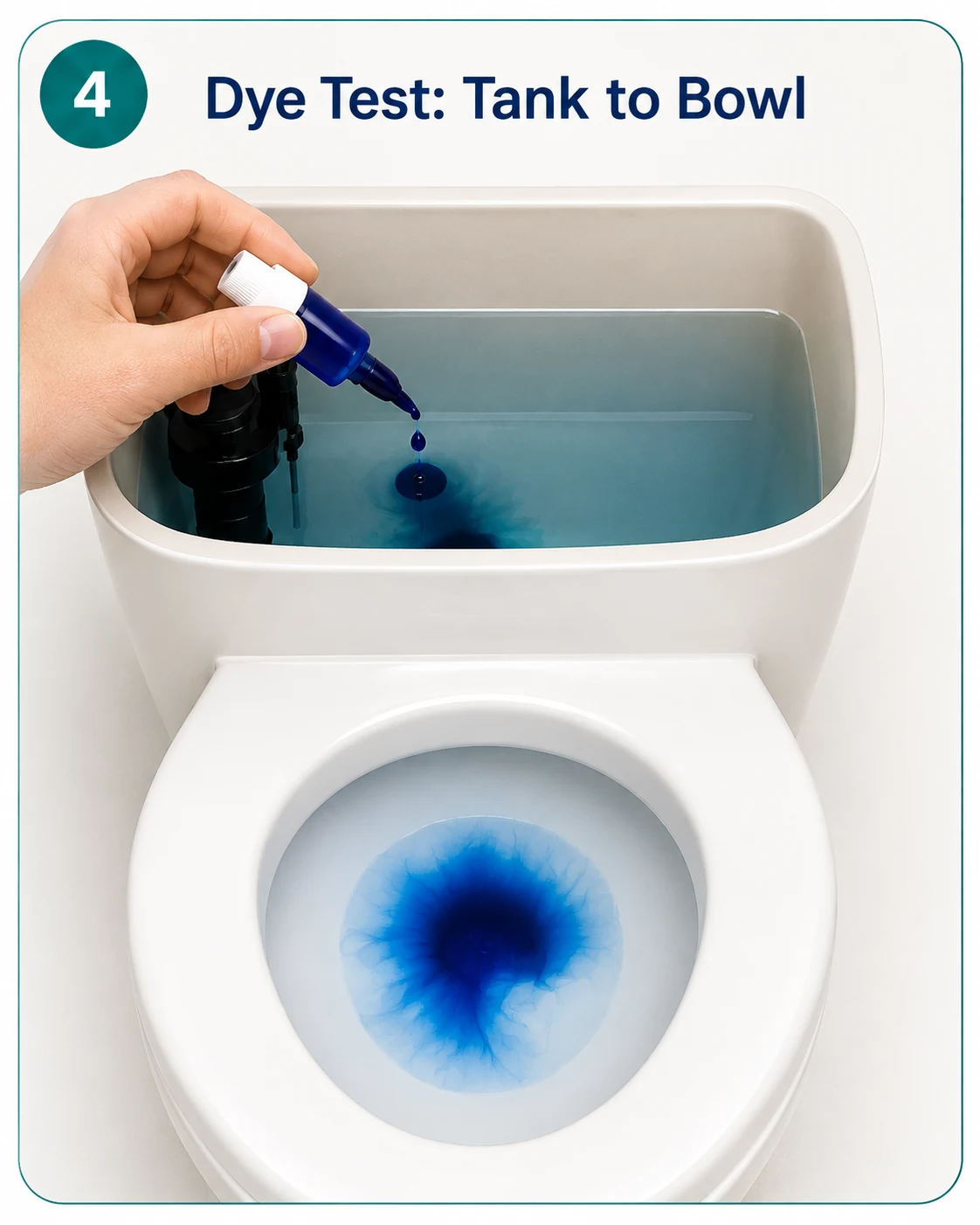
Water is leaking from the tank into the bowl. Inspect the flapper or canister seal, its seating surface, and the chain before replacing the fill valve.
The flush seal is less likely to be the problem. Recheck the water level, overflow path, refill tube, and fill-valve shutoff behavior.
A Flapper Can Leak Even When It Looks Closed
A worn, warped, dirty, or mineral-coated flapper may sit on the flush valve and still allow a slow leak. The same idea applies to a canister-style toilet: the rubber seal can look normal from above while failing to seal completely.
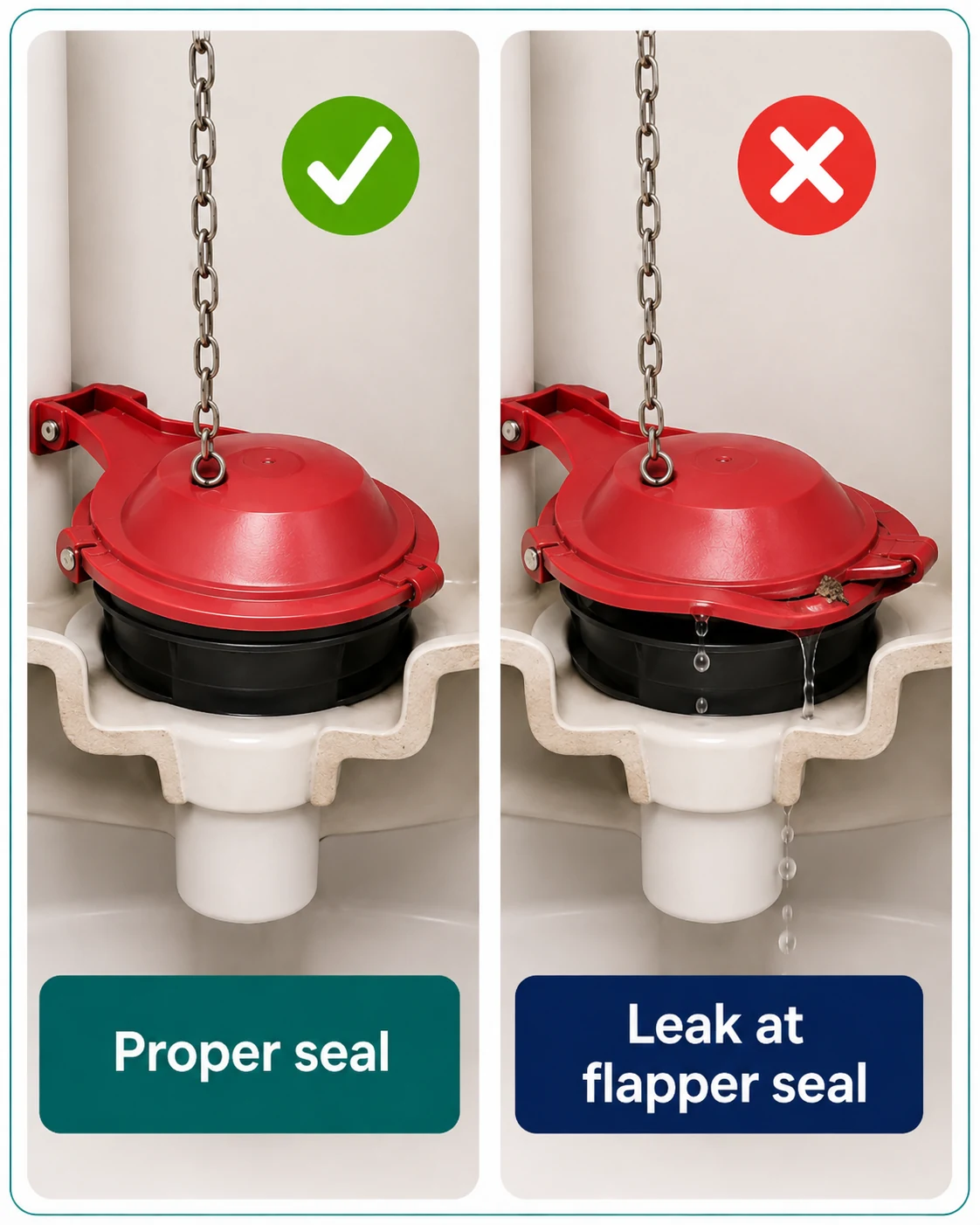
Press the flapper or canister down gently while the toilet is running. If the sound stops, that is a strong clue that the sealing surface is the issue. Clean away loose debris and inspect the rubber for distortion, cracking, or hardening. If the seal is clearly worn, use a replacement designed for the toilet or flush valve you actually have.
Check the Chain Before You Replace the Flapper
The handle chain needs enough slack for the flapper to sit fully on its seat. If the chain is too tight, it can hold the flapper open by a tiny amount. Too much loose chain can also become tangled or caught.

Kohler suggests slight chain slack, and Fluidmaster commonly specifies about half an inch on many flapper setups. The exact chain position depends on the flush mechanism, so the real goal is simple: the handle must lift the flapper fully during a flush and then allow it to seal completely afterward.
Use This Symptom Table to Avoid Replacing the Wrong Part
| What you see or hear | Most useful next check | Likely area |
|---|---|---|
| Water continuously enters the overflow tube | Check water level and lift the float | Float / fill valve / level adjustment |
| Toilet gets quiet, then refills every few minutes | Do the dye test | Flapper / canister seal / flush valve |
| Running stops when you press down on the flapper | Inspect and clean the sealing surface | Flapper or flush-valve seal |
| Flapper never sits flat after a flush | Inspect chain and handle movement | Chain / handle / flapper alignment |
| Fill valve keeps flowing even when the float is raised | Check manufacturer service procedure or replace valve | Fill valve |
EPA WaterSense estimates that a small toilet leak, such as a worn flapper leaking at about 0.02 gallons per minute, can waste roughly 860 gallons in a month. A severe stuck-fill-valve leak can be dramatically larger. That is why it is worth diagnosing a toilet that runs even if the bowl itself looks normal.
Do Not Replace the Whole Toilet Yet
A toilet that keeps running is usually a tank-control problem, not a reason to replace the porcelain fixture. A fill valve, flapper, canister seal, chain adjustment, or water-level correction is much more likely than a problem with the bowl itself.
Whole-toilet replacement makes more sense when you have a cracked tank or bowl, repeated structural leaks, severe performance problems that are unrelated to the tank controls, or you are intentionally upgrading an older inefficient toilet.
If the shutoff valve does not close, is badly corroded, or starts leaking when you touch it, stop there. A simple tank repair can turn into a larger plumbing problem if the supply valve cannot be controlled safely.
When a Plumber Makes More Sense
Water on the floor, a cracked tank, a leaking supply connection, movement at the base, or recurring leaks after the correct tank parts have been repaired are different problems from a normal running-toilet diagnosis.
The Fastest Way to Diagnose a Toilet That Keeps Running
Do not start by guessing which replacement kit you need. First decide which path the water is taking. If it is going into the overflow tube, work on the water level, float, and fill valve. If the toilet becomes quiet and then refills later, test for a flapper or flush-seal leak.
That one distinction prevents most unnecessary part swapping. From there, the dye test and chain check usually tell you whether the problem is a seal, an adjustment, or a fill valve that is no longer shutting off correctly.
For more home plumbing diagnosis, browse Plumbing Problems or start from the HomeIssueLab Troubleshooting Guides.
Frequently Asked Questions
Why does my toilet keep running after I flush?
The most common paths are water overflowing because the fill level is too high or the fill valve will not shut off, and water leaking out of the tank past a flapper or canister seal.
How do I know if the flapper is leaking?
Add a few drops of food coloring to the tank and wait 10–15 minutes without flushing. If color appears in the bowl, water is leaking from the tank past the flush-valve seal.
Why does my toilet run every few minutes?
That usually means the tank is slowly losing water. Once the level drops, the fill valve opens again. A worn flapper or canister seal is a common cause.
Can a chain that is too tight make a toilet run?
Yes. If the chain keeps upward tension on the flapper, the flapper may not sit flat on the flush-valve seat and water can leak into the bowl.
Sources Used for This Guide
The diagnostic sequence was checked against current manufacturer guidance and U.S. EPA WaterSense information.