
Furnace Not Turning On but Thermostat Is Working? Check These Causes First
If the thermostat is calling for heat but the furnace stays quiet, do not start replacing ignition parts at random. Check the thermostat settings, furnace power, breaker, filter, access-panel switch, and what the furnace does during its startup sequence. The point where that sequence stops is often the best clue to the real cause.
If your furnace is not turning on, first confirm the thermostat is set to Heat and the set temperature is above room temperature. Then check the furnace service switch, circuit breaker, air filter, and whether the blower-door panel is seated correctly. If those basics are good, listen to the startup sequence. A furnace that is completely silent points you in a different direction from one that starts the inducer, attempts ignition, lights briefly, or runs the blower without heat.
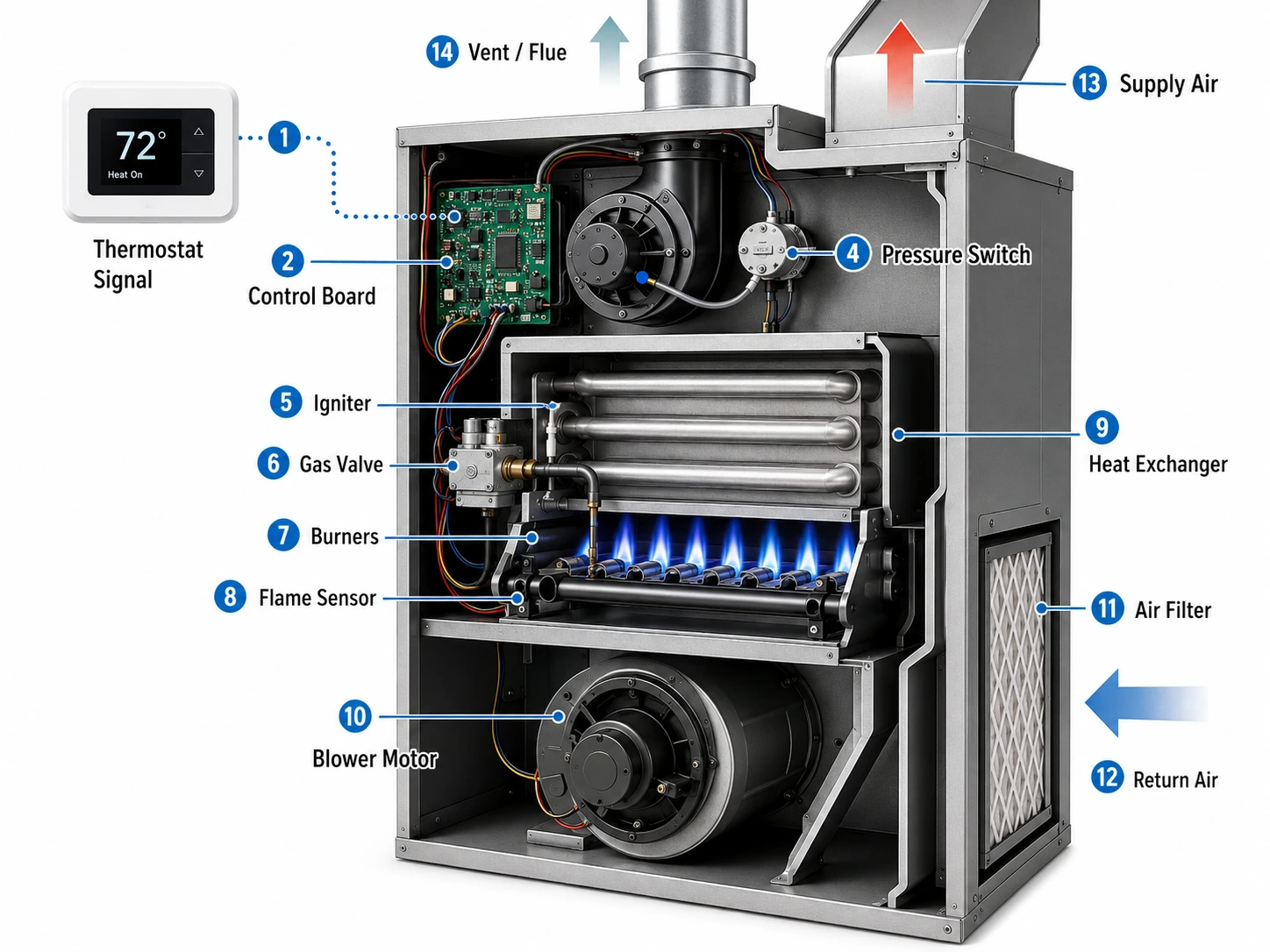
Start With What the Furnace Is Actually Doing
A furnace that will not turn on can mean several different things. It may be completely silent, the inducer may start but the burners never light, the burners may light for only a few seconds, or the blower may run without warm air. Those symptoms should not be diagnosed as if they were the same failure.
| What you notice | What it can suggest | Best next check |
|---|---|---|
| Nothing happens at all | No heat call reaching furnace, no power, open door switch, control issue. | Thermostat, service switch, breaker, access panel. |
| Inducer starts, but igniter never activates | Startup sequence has begun but safety proof or ignition step is not completing. | Pressure/venting-related issues, error code, professional diagnosis. |
| Igniter glows, but burners do not light | Ignition sequence reached the igniter stage. | Gas supply, gas valve/control, model-specific service diagnosis. |
| Burners light, then shut off quickly | Flame is not being proven reliably or another safety condition is occurring. | Flame sensor and diagnostic code. |
| Furnace heats, then shuts down early | Restricted airflow or high-temperature safety limit may be involved. | Filter, returns, supply registers, blower airflow. |
Furnace Not Turning On? Do These Basic Checks First
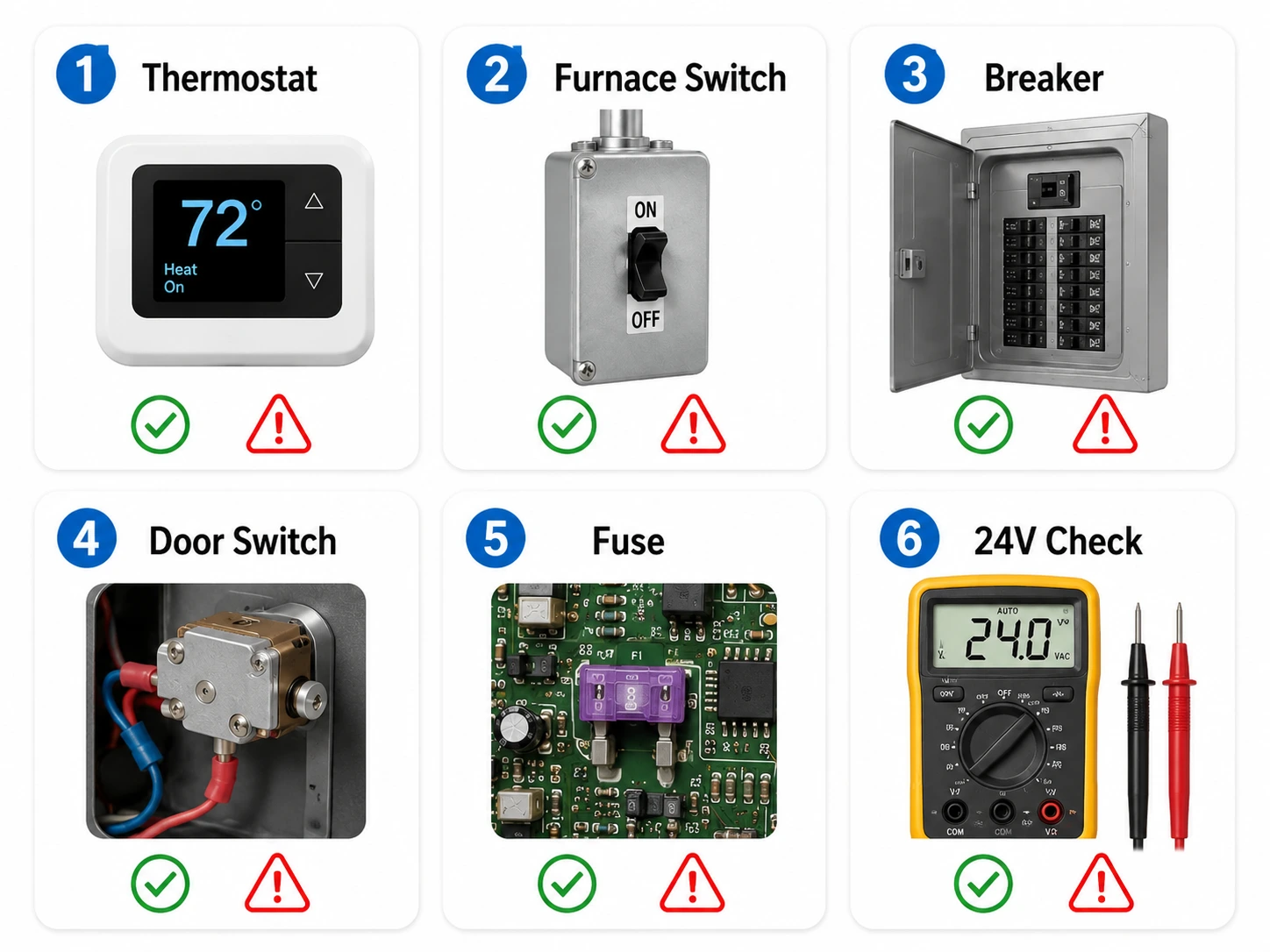
Confirm the Thermostat Is Calling for Heat
Set the thermostat to Heat, set the fan to Auto, and raise the set temperature several degrees above the current room temperature. Give the system a few minutes to respond.
If the thermostat uses replaceable batteries, weak batteries are an easy thing to rule out. A thermostat display that says “Heat On” does not prove that every part of the furnace is working; it only tells you the thermostat is attempting to call for heat.
Check the Furnace Service Switch
Many furnaces have a switch that looks like a normal light switch on or near the furnace. It can be turned off accidentally during cleaning, storage, or summer work around the utility area.
Make sure it is in the On position. Do not remove electrical covers to do this check.
Check the Circuit Breaker
A gas furnace still needs electricity for the control board, inducer, igniter, gas-valve control, sensors, and blower.
Look for the breaker labeled Furnace, Heat, or HVAC. If it has tripped, follow the furnace manufacturer’s guidance. If a breaker trips again, stop resetting it and call a qualified HVAC or electrical professional because a repeat trip indicates an electrical problem that needs diagnosis.
Make Sure the Blower-Door Panel Is Fully Seated
Many furnaces use a safety switch behind the access panel. If the panel is not installed correctly, the switch may remain open and the furnace may appear completely dead.
Turn off power before repositioning a furnace access panel. Once the panel is seated correctly, restore power and test the furnace normally.
Understand the Furnace Heating Sequence
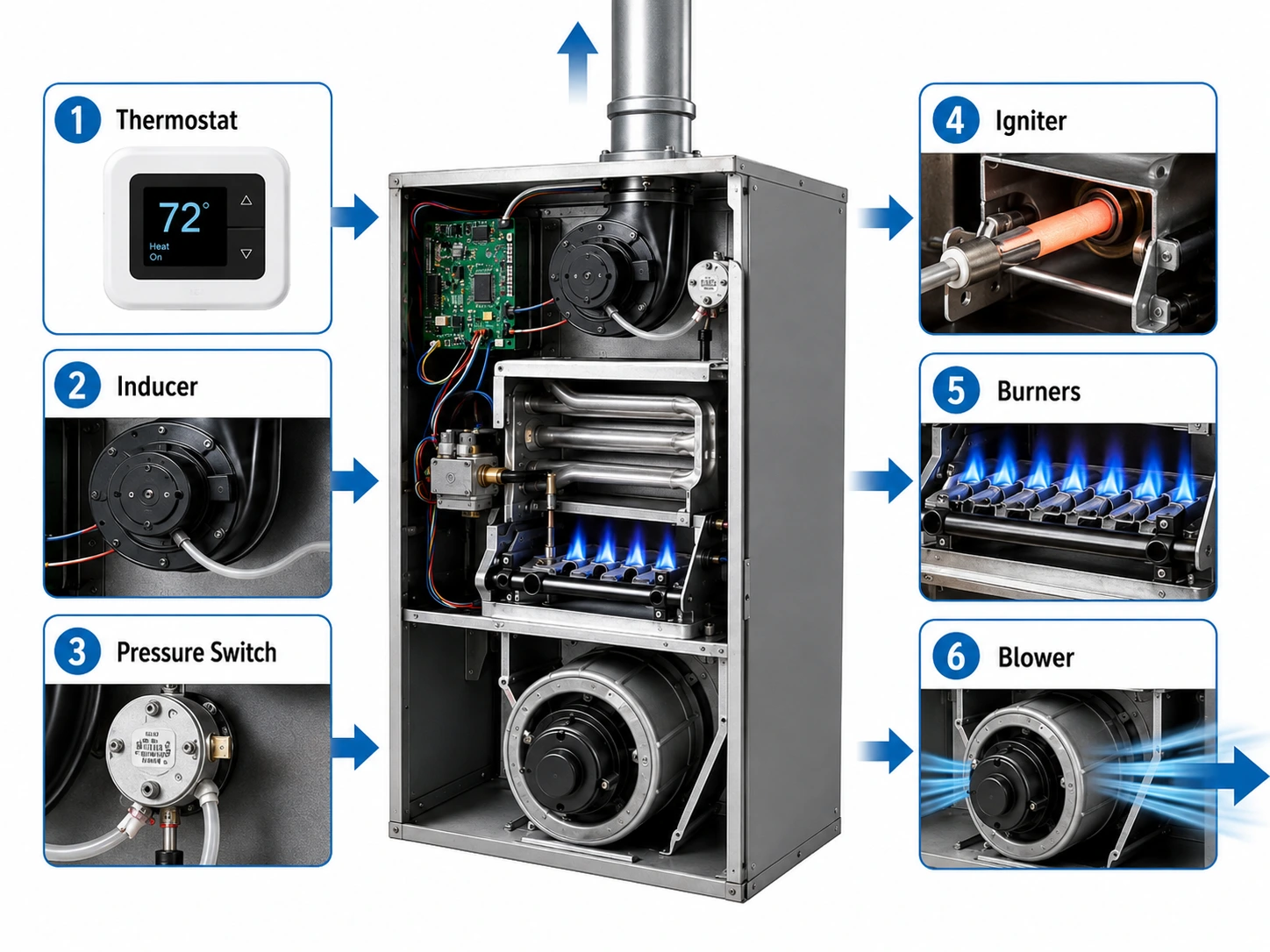
The exact timing varies by furnace, but a typical modern gas furnace follows a recognizable sequence. The thermostat calls for heat, the control starts the inducer, the furnace proves that venting conditions are acceptable, the igniter is energized, gas is admitted to the burners, flame is proven, and then the blower moves warmed air through the home.
The useful diagnostic question is not simply “Does the furnace work?” It is “How far into that sequence does it get?”
Check the heat call, service switch, breaker, access-panel switch, and visible diagnostic indicator before thinking about ignition parts.
The control has power and received a heat call. Venting, pressure proof, safety controls, ignition components, or the control sequence may now be involved.
The furnace has progressed much farther into the sequence. Flame proving becomes a more relevant clue.
Airflow, high-limit operation, blower performance, or another safety condition may need attention.
Read the Diagnostic Light Before Replacing Parts
Many modern furnaces have an LED on the control board that flashes a diagnostic pattern. The meaning of the flashes is manufacturer- and model-specific.
If there is a viewing window, read the code without opening energized electrical compartments. Then compare the pattern with the label on the furnace panel or the owner’s/service information for that exact model.
Diagnostic-code definitions vary by manufacturer and model. Record the pattern exactly before turning power off.
If the Furnace Reaches the Ignition Stage
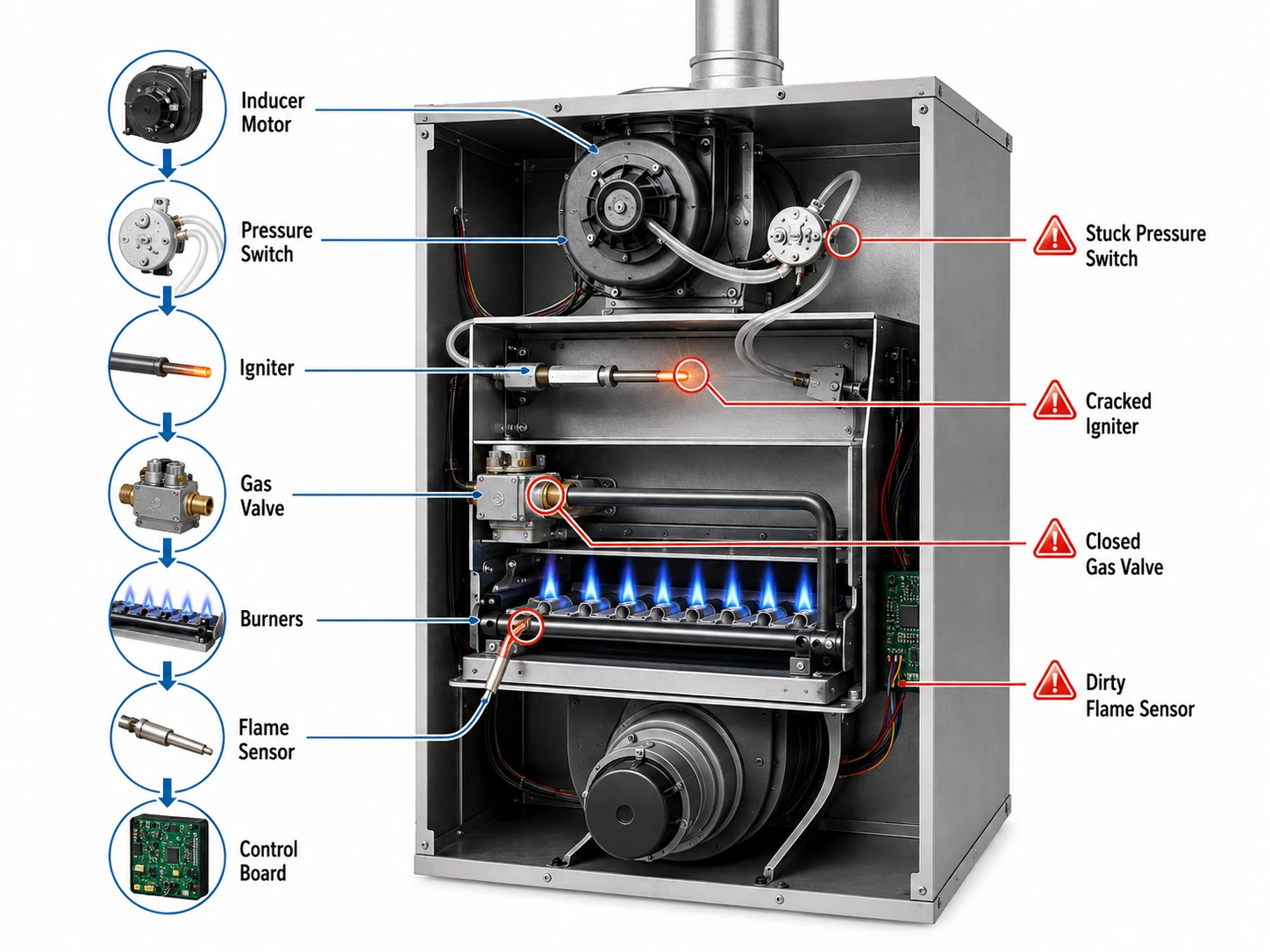
The Inducer Runs but the Igniter Does Not
If you clearly hear the inducer start but never see the igniter operate, do not jump straight to buying an igniter. The furnace may not have completed a pressure or safety check required before ignition is allowed.
Blocked venting, condensate problems on condensing furnaces, pressure-switch issues, wiring, safety switches, the igniter itself, or the control can all affect what happens next. This is where the diagnostic code and model-specific service information become important.
The Igniter Operates but the Burners Do Not Light
If the igniter clearly activates but there is no flame, the sequence has reached the ignition stage. Do not loosen gas fittings or attempt gas-valve adjustments. Confirm only homeowner-safe basics, such as whether the home has gas service and whether an accessible appliance shutoff has not been accidentally closed.
Further gas-valve and live electrical diagnosis should be handled by a qualified HVAC professional.
The Burners Light but Shut Off After a Few Seconds
A furnace that lights and then quickly loses flame has a different symptom than a furnace that never ignites. Flame-sensing problems are one possible cause, but the exact diagnosis should still follow the furnace’s error code and service information.
If the flame sensor is readily accessible and the manufacturer permits routine cleaning, power and gas must be shut off before it is removed. Do not sand or modify ignition components unless the furnace manufacturer’s procedure calls for it.
Do Not Ignore Airflow Problems
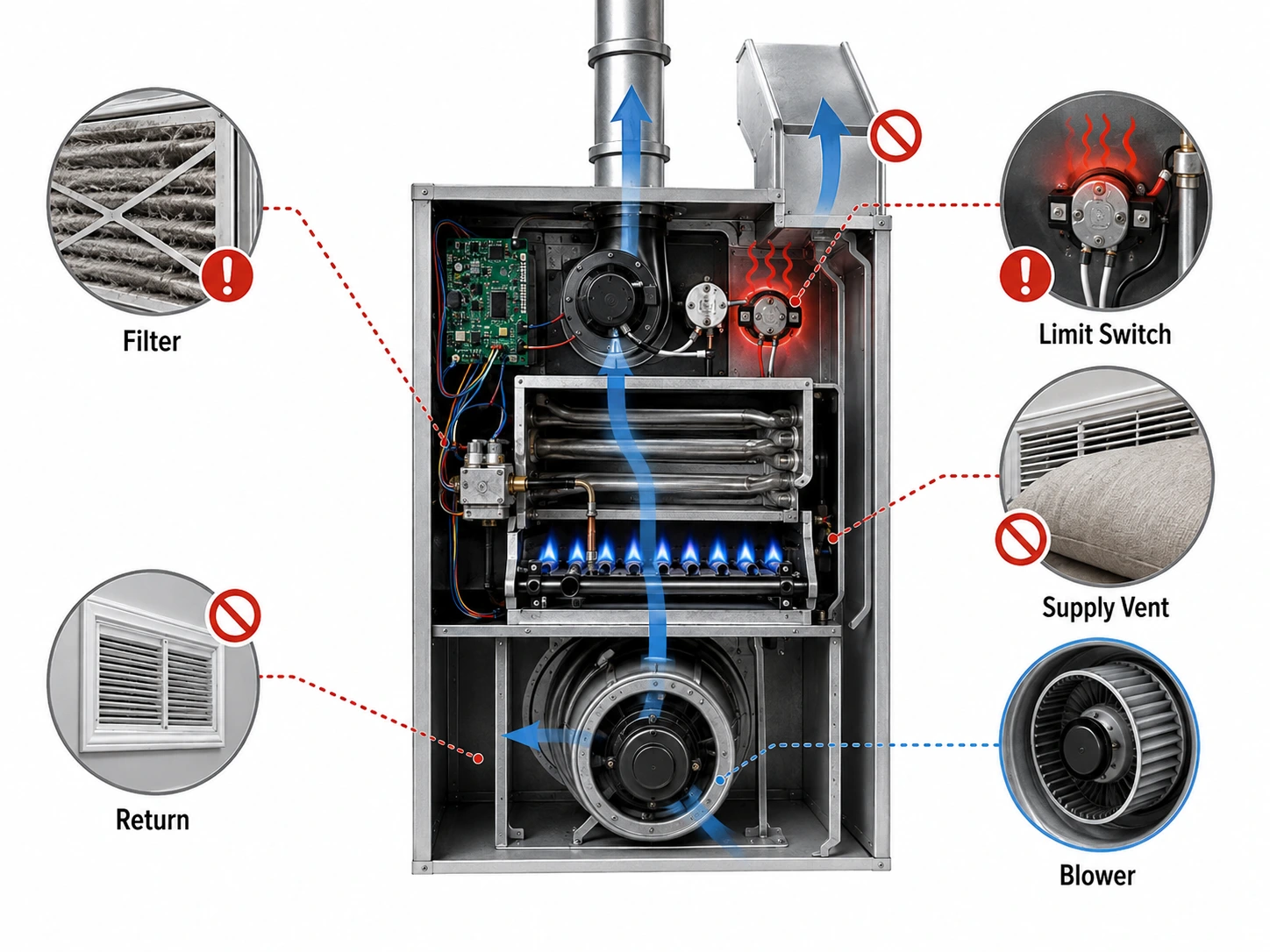
A dirty filter may not make every furnace completely silent, but restricted airflow can cause overheating, poor heating performance, repeated cycling, and high-limit shutdowns.
Inspect the filter and replace it if it is visibly dirty. Make sure return-air openings and supply registers are not blocked by furniture, rugs, storage, or closed covers.

The airflow path also helps explain why a furnace can light successfully yet still shut down later. If the heat exchanger gets too hot because airflow is restricted, a safety limit can interrupt burner operation.
What If the Thermostat Says Heat On but Nothing Happens?
When the thermostat shows a heat call but the furnace remains completely silent, the thermostat display alone cannot prove the signal is reaching the furnace. The useful homeowner checks are still the thermostat settings and batteries, service switch, breaker, and access panel.
If those are correct and the furnace remains dead, the next steps can involve low-voltage controls, wiring, transformer output, board fuses, and control-board diagnosis. Those checks can expose the technician to live line voltage inside the furnace even though the thermostat circuit itself is low voltage.
A furnace contains both low-voltage control wiring and potentially lethal line voltage. A diagram showing “24V check” is an explanation of the control circuit, not an instruction for an untrained homeowner to probe an energized control board.
What If the Furnace Will Not Start After Summer?
The first heating cycle of the season is when accidental switch changes, dead thermostat batteries, dirty filters, blocked registers, and stored items around the furnace are often discovered.
Before the weather turns cold, clear the furnace area, install the correct clean filter, check the thermostat, and have a fuel-burning heating system inspected on the schedule recommended by its manufacturer and a qualified HVAC professional.
Gas Furnace Safety: Know When to Stop
A gas furnace combines combustion, electricity, moving equipment, hot surfaces, and a venting system. Good troubleshooting includes knowing when the symptom has moved beyond a safe homeowner check.
Do not keep resetting safety devices or repeatedly cycling a furnace that is showing a combustion, electrical, or venting problem.
The U.S. Consumer Product Safety Commission recommends professional inspection of fuel-burning home heating systems and stresses that a carbon-monoxide alarm does not replace proper appliance maintenance.
If a CO alarm sounds, follow the alarm manufacturer’s instructions and current emergency guidance. CPSC advises moving outside to fresh air and contacting emergency services rather than trying to locate the source yourself.
When to Call an HVAC Technician
- The furnace breaker repeatedly trips.
- The inducer runs but the ignition sequence repeatedly stops.
- The igniter operates but the burners do not light.
- The burners light and repeatedly shut off.
- You see a gas, venting, combustion, or carbon-monoxide concern.
- The diagnostic code points to a pressure, limit, gas-valve, board, or other internal fault.
- The repair requires live electrical measurements or gas-system work.
The Bottom Line
When a furnace not turning on problem appears, the fastest way to narrow it down is to start with the basics and then observe the startup sequence. Confirm the thermostat settings, power switch, breaker, filter, and access panel before assuming that an ignition component has failed.
If the furnace begins its sequence, note exactly where it stops. An inducer that runs without ignition, an igniter that operates without flame, and burners that light then shut down all point toward different diagnostic paths.
For more heating and cooling help, browse HVAC Troubleshooting or visit the HomeIssueLab Troubleshooting Guides.
Frequently Asked Questions
Why is my furnace not turning on even though the thermostat says Heat On?
The thermostat may be calling for heat while the furnace has no power, an open access-panel switch, a control problem, a safety lockout, or another fault preventing the startup sequence from beginning.
Can a dirty filter stop a furnace from working?
A badly restricted filter can reduce airflow and contribute to overheating and safety-limit shutdowns. It should be checked early because it is simple, inexpensive, and important for normal airflow.
Why does my furnace click but not ignite?
A click can occur during several points of the startup sequence. The useful clue is whether the inducer starts, the igniter activates, and any diagnostic code appears. Ignition, pressure/safety proof, gas supply, or control issues may be involved.
Why does the furnace light and then shut off?
Flame proving is one possible cause when burners light and then stop quickly, but the diagnostic code and exact furnace model should guide the next step.
Should I reset a furnace breaker that keeps tripping?
No. A breaker that trips again indicates an electrical problem that needs diagnosis. Repeatedly resetting it can create a safety risk or further equipment damage.
Official References
These manufacturer and U.S. safety resources support the basic homeowner checks and safety limits used in this guide.