
Refrigerator Not Cooling but Freezer Works? Diagnose the Real Cause
If the freezer is still cold but the refrigerator section is warm, the compressor is not the first part to replace. Start by checking the actual temperature, airflow, evaporator fan, frost pattern, and air damper. The exact cooling design varies by model, so this guide focuses on symptoms that help narrow the problem before you buy parts.
When the freezer is cold but the refrigerator is warm, first confirm the refrigerator is actually above 40°F (4°C). Then check whether food is blocking the air vents, listen for the evaporator fan, inspect the freezer rear panel for heavy frost, and check whether cold air is reaching the fresh-food section. On many single-evaporator refrigerators, poor airflow is a more useful starting point than guessing that the compressor has failed.
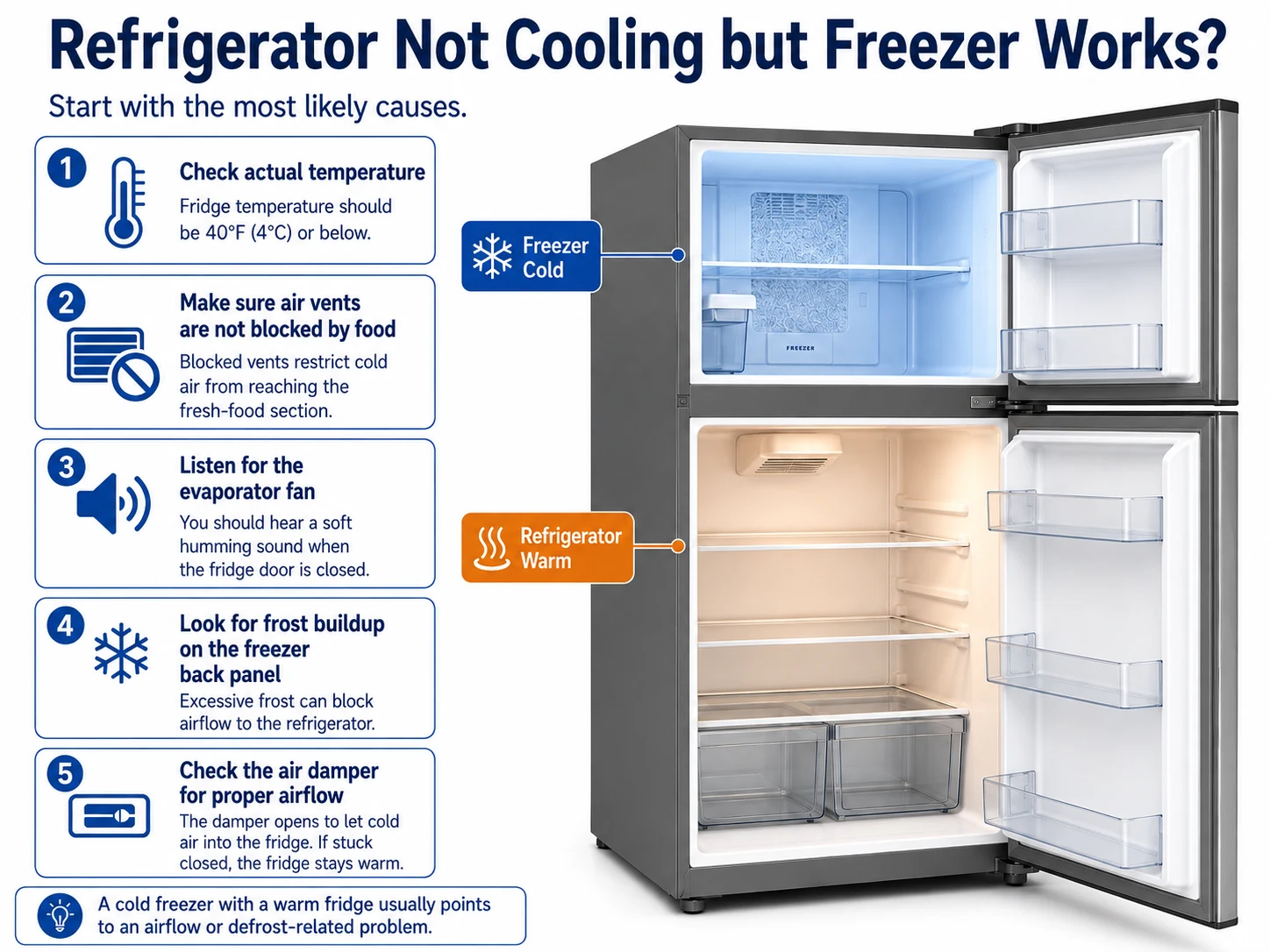
Food Safety Comes First
A refrigerator that feels a little warm can quickly become a food-safety problem. The U.S. Food and Drug Administration recommends keeping the refrigerator at 40°F (4°C) or below and the freezer at 0°F (-18°C).
Use a refrigerator thermometer instead of relying only on the control-panel number. If perishable food has been held too warm for too long, follow current food-safety guidance rather than assuming it is safe because the freezer is still working.
A compartment can feel cool while still being above a safe food-storage temperature. Measure the actual temperature before deciding how urgent the problem is.
FDA guidance: Refrigerator and freezer temperature recommendations .
Refrigerator Not Cooling but Freezer Works: What This Symptom Usually Means
In many traditional top-freezer, bottom-freezer, and side-by-side designs, one evaporator cools the freezer and a fan moves some of that cold air through ducts into the refrigerator section. If that airflow is blocked, weak, or stopped, the freezer may remain cold while the fresh-food section warms up.
That pattern does not prove one specific part has failed. Some modern refrigerators use separate evaporators or more complex airflow controls, so the exact model matters.
| What you notice | What it suggests | Check next |
|---|---|---|
| Freezer cold, fridge warm, weak air from fridge vent | Cold air is not reaching the refrigerator normally. | Blocked vents, evaporator fan, frost buildup, damper. |
| Heavy frost on freezer rear panel | Airflow behind the panel may be restricted by ice. | Evaporator area and defrost-related causes. |
| No evaporator fan sound when it should be running | Fan, connector, wiring, ice obstruction, or control issue. | Fan area after unplugging the refrigerator. |
| Fan runs, but almost no air enters fridge | Vent path or damper may be restricted. | Food blockage, ice, damper position. |
| Both freezer and refrigerator are getting warm | This is no longer the same symptom pattern. | Power, compressor operation, condenser airflow, sealed system. |
Understand How Cold Air Reaches the Refrigerator
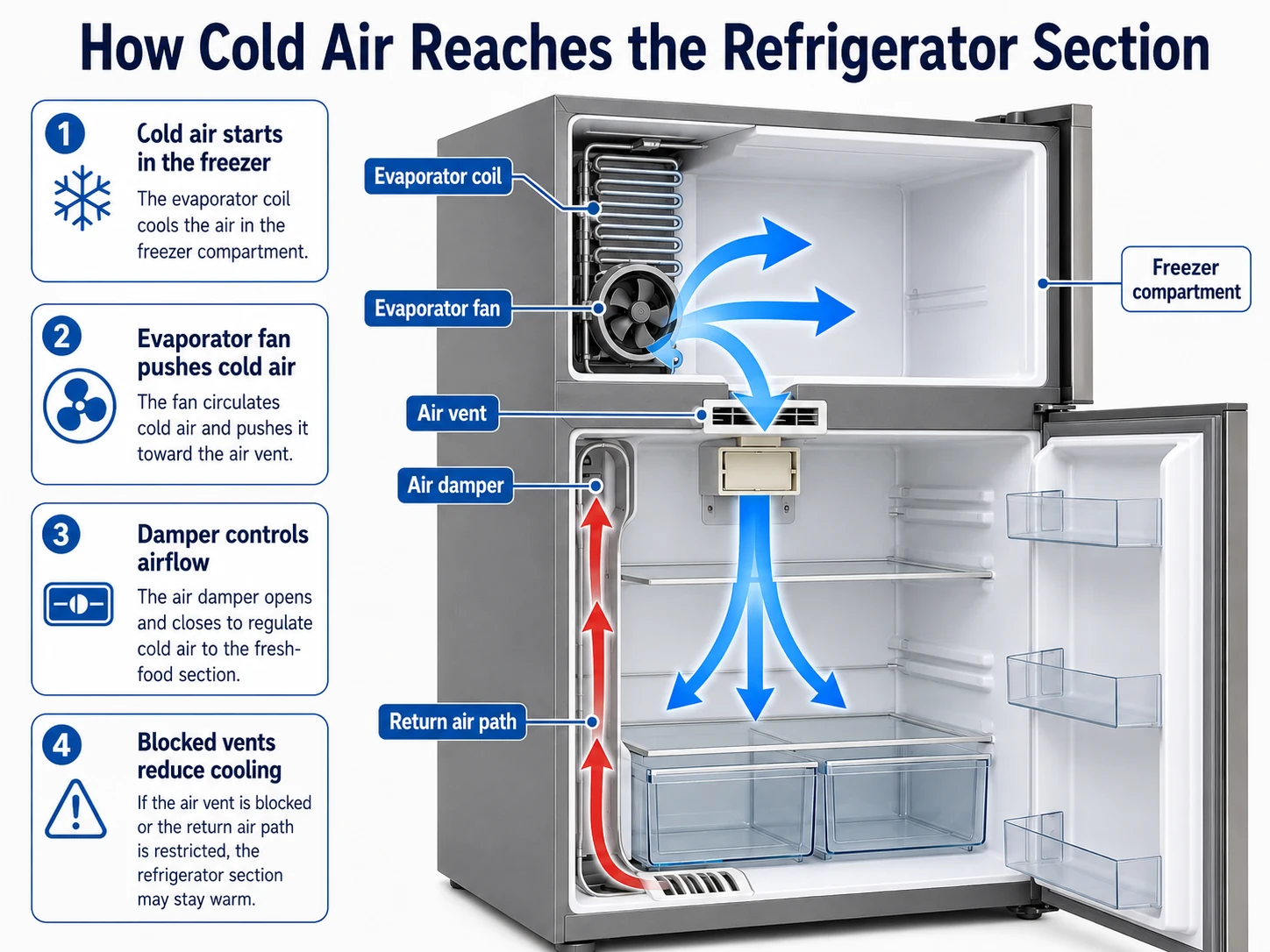
The exact vent locations vary by model, but the basic airflow idea is useful: cold air must be able to leave the freezer area, reach the fresh-food compartment, and return through the designed air path.
Whirlpool specifically warns that blocked vents reduce airflow between compartments and can create temperature problems. That makes vent inspection one of the easiest checks to do before opening anything.
Manufacturer reference: Whirlpool — Checking refrigerator air vents for blockage .
Diagnose the Problem in This Order
Measure the Refrigerator and Freezer Temperatures
Put a refrigerator thermometer in the fresh-food section and record the temperature. If possible, measure the freezer too.
A cold freezer with a refrigerator clearly above 40°F gives you a much stronger symptom than “the fridge feels warm.”
Make Sure Food Is Not Blocking the Vents
Look for air openings at the rear, upper wall, or side wall of both compartments. Move packages, containers, and bags away from them.
Also avoid packing the refrigerator so tightly that air cannot circulate around the shelves.
Feel for Airflow at the Refrigerator Vent
With the refrigerator running, place your hand near the fresh-food air vent. You are looking for a useful clue: normal airflow, weak airflow, or no airflow.
The problem may be less about air delivery and more about sensing, control, door sealing, load, or the specific cooling design.
Continue to the evaporator fan, frost pattern, vent path, and damper.
Check the Evaporator Fan

The evaporator fan moves cold air across the evaporator and through the refrigerator’s airflow path. If it stops, the freezer may still feel cold near the evaporator while the fresh-food compartment receives little or no cold air.
Open the freezer and listen. On many models the fan stops when the freezer door opens, so pressing the door switch can simulate a closed door. Do not remove panels or reach into moving parts while the refrigerator is powered.
Move on to frost buildup, blocked ducts, and the air damper.
Ice may be touching the blade, or the fan motor, connector, wiring, or control may need further diagnosis.
Look for Heavy Frost on the Freezer Rear Panel
A thick layer of frost or ice on the freezer’s rear interior panel is an important clue. It can mean the evaporator area behind that panel is becoming ice-covered, which restricts the air the fan can move.

Heavy frost can be associated with a defrost-system problem, but do not replace a defrost heater, sensor, thermostat, or control board based only on a photo. Warm moist air entering through a door-seal problem can also contribute to ice.
Sharp tools can puncture a refrigerant line or damage the evaporator. If a manual thaw is appropriate for your model, unplug the refrigerator and use a safe, patient thawing method.
Check the Air Damper
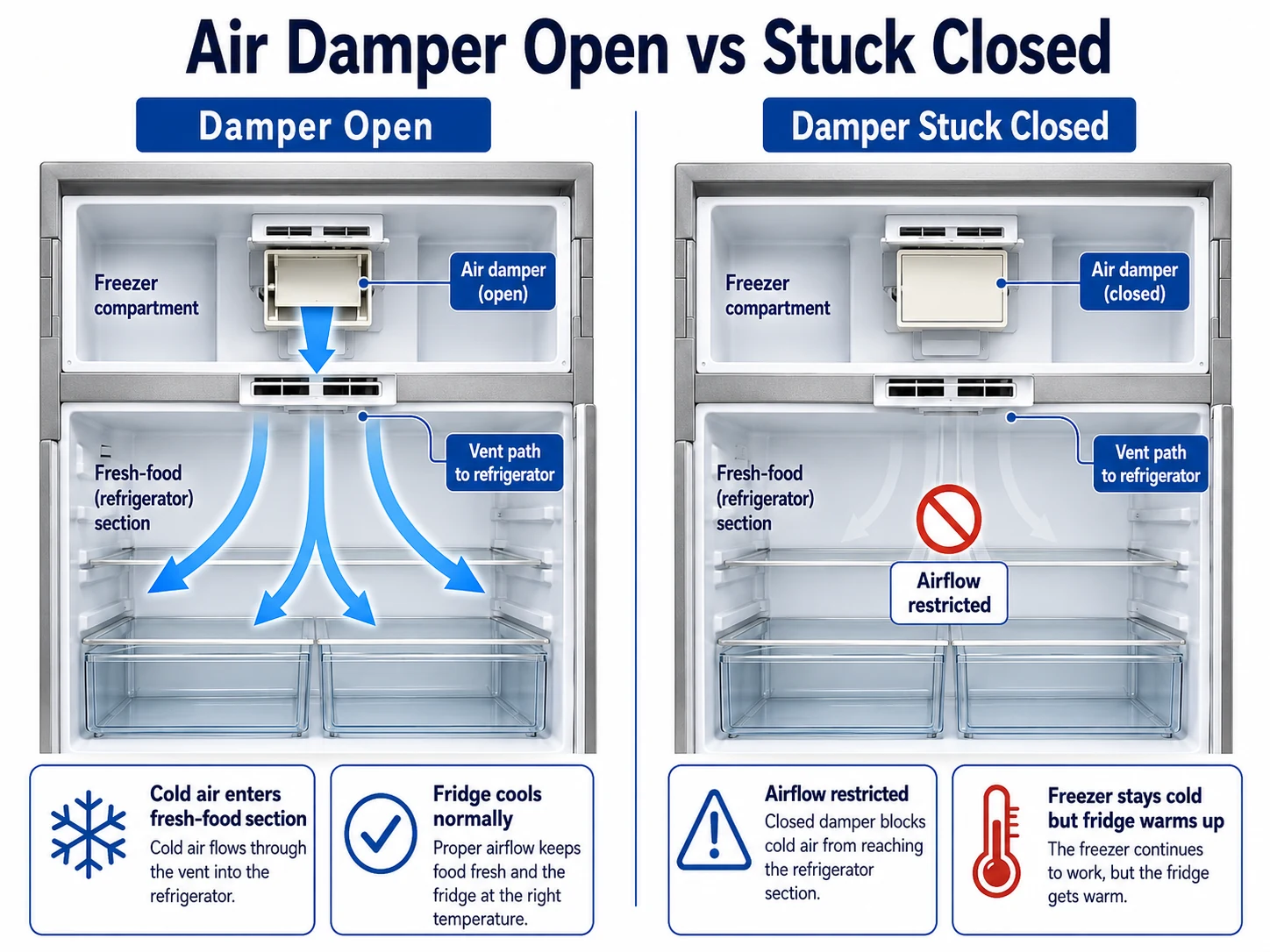
The air damper is a controlled opening between the cold-air path and the fresh-food compartment on many single-evaporator refrigerators. Some use a mechanical control and others use a motorized damper.
If the evaporator fan is moving air normally but the refrigerator vent has little airflow, inspect the damper path for food, ice, broken parts, or a door that is stuck closed.
Do not force a motorized damper by hand. A broken gear or actuator can be damaged further.
What About the Thermistor?
A thermistor reports temperature to the refrigerator control. If the sensor reading is wrong, the control can make incorrect cooling or damper decisions. However, a thermistor should not be replaced only because the refrigerator is warm.
First rule out the visible airflow problems. If the fan, vents, damper, and frost pattern all look normal, model-specific thermistor testing becomes more useful.
Could the Compressor Still Be the Problem?
A cold freezer makes a complete loss of refrigeration less obvious than it would be if both compartments were warm, but it does not prove the compressor or sealed system is perfect.
If the freezer temperature is also drifting upward, only a small section of the evaporator is frosting, or both compartments are losing cooling, the diagnosis needs to expand beyond simple airflow.
Blocked vents, evaporator fan problems, frost/ice restriction, damper problems, or model-specific airflow control faults.
Both compartments warming, abnormal compressor behavior, condenser airflow problems, partial frost pattern, or suspected sealed-system issue.
Single Evaporator vs Dual Evaporator Refrigerators
This distinction matters. In many single-evaporator refrigerators, the freezer evaporator supplies cold air to both compartments. In a dual-evaporator design, the refrigerator and freezer may have separate evaporators and separate fans.
That means “check the freezer damper” is not universal advice. Before buying parts, look up the exact model number and confirm how that refrigerator is designed.
How to Access the Evaporator Area Safely
Only continue here if the refrigerator is unplugged and you are comfortable removing interior shelves and a plastic rear freezer panel. The exact fasteners and wiring vary by model.
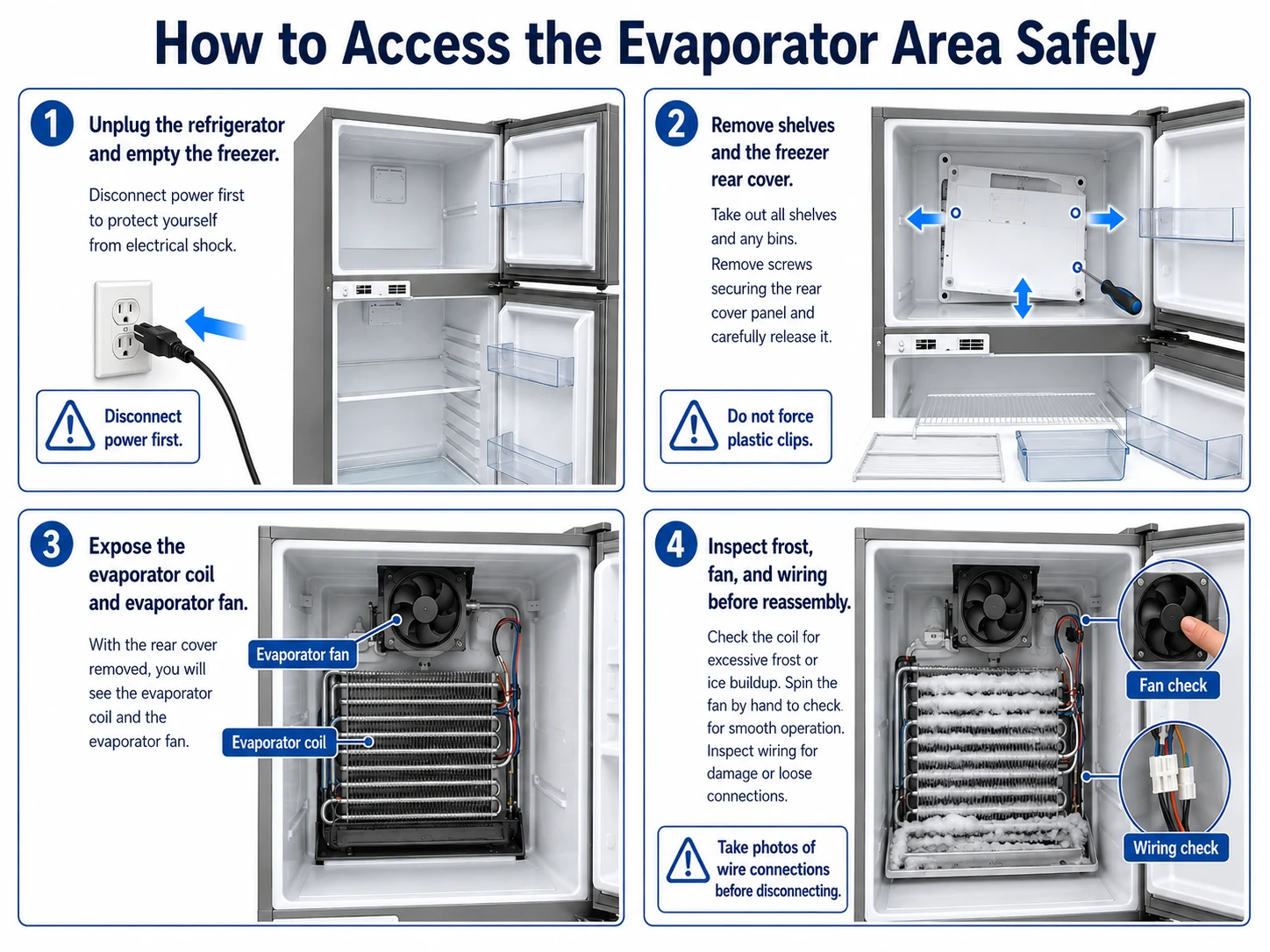
Unplug the Refrigerator
Move perishable food to safe cold storage if needed, disconnect power, and empty the freezer enough to reach the rear interior panel.
Remove Shelves, Bins, and the Rear Interior Cover
Photograph the freezer before disassembly. Remove shelves and bins, then remove the fasteners holding the rear cover. Do not force hidden clips.
Inspect the Evaporator and Fan
Look for a fan blade blocked by ice, a disconnected plug, damaged wiring, or heavy ice covering the evaporator.
With the refrigerator still unplugged, you can check whether the fan blade turns freely by hand. Do not power the refrigerator with exposed wiring or panels removed unless you are trained and following model-specific service procedures.
Record Part Numbers Before Ordering Anything
Use the refrigerator model number and the printed part number on the fan, damper, sensor, or control component. Similar-looking refrigerators can use different parts.
Refrigerant recovery, brazing, compressor replacement, and energized high-voltage diagnosis are not homeowner-level procedures.
Should You Fully Defrost the Refrigerator?
If heavy ice is blocking the evaporator or airflow path, a complete unplugged thaw may temporarily restore airflow. That can be a useful diagnostic clue, but it is not automatically the permanent repair.
If the same heavy frost returns after normal operation, the underlying cause still needs to be found. Depending on the model, that may involve the defrost heater, sensor, thermostat, wiring, door sealing, or electronic control.
When the Simple Checks Do Not Match the Symptom
If the refrigerator is warm but airflow seems normal, there is no unusual frost, the evaporator fan runs correctly, and the damper is open, stop replacing parts by guesswork.
At that point, the model-specific service information matters more. Possible next checks can include temperature-sensor readings, control diagnostics, refrigerator-specific fans, and cooling-system performance.
The Bottom Line
The phrase refrigerator not cooling but freezer works describes a symptom pattern that should be diagnosed from the actual temperatures and airflow path. Make sure the vents are clear, listen for the evaporator fan, check for heavy frost, and inspect the air damper if your model uses one.
The goal is not to name a failed part as quickly as possible. It is to gather enough evidence that the next repair step actually matches the symptom.
For more home appliance help, browse Appliance Problems or visit the HomeIssueLab Troubleshooting Guides.
Frequently Asked Questions
Why is my freezer cold but the refrigerator warm?
On many refrigerators, the fresh-food section depends on cold air moved from the evaporator area. Blocked vents, a failed or obstructed evaporator fan, heavy frost, or an air-damper problem can reduce that airflow.
Does a working freezer mean the compressor is good?
Not conclusively. It makes a total loss of refrigeration less obvious, but compressor, sealed-system, or control problems can still exist depending on the temperature pattern and refrigerator design.
Can a blocked air vent make the refrigerator warm?
Yes. On designs that move cold air between compartments, food or ice blocking the vent can reduce cooling in the refrigerator section.
How do I know if the evaporator fan is working?
Listen for fan operation while the refrigerator is running. Some models stop the fan when the door is open, so the door switch may need to be pressed to simulate a closed door. Never reach into a moving fan.
Does heavy frost mean the defrost heater is bad?
Not by itself. Heavy frost shows that ice is restricting the evaporator area, but the cause can involve the heater, sensor, thermostat, wiring, control, or excess moisture entering the compartment.
Official References
These sources are useful for food-safety temperatures and manufacturer airflow guidance.